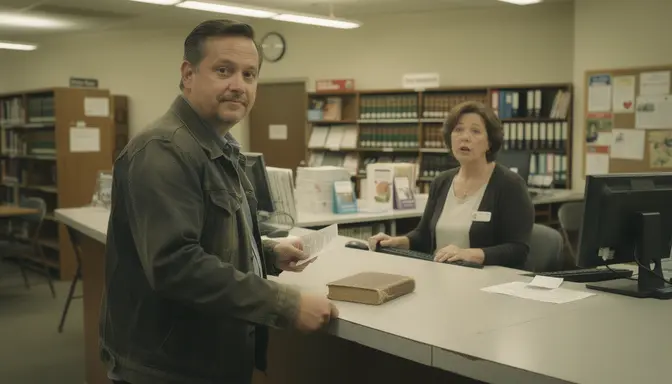
BOISE, ID — Marcus Webb, 41, of Boise, Idaho, confirmed Tuesday that after reading the complete 94-page privacy and terms-of-service agreement for an AI productivity chatbot he downloaded on a Thursday, he has legally consented to have his conversations, sleep data, emotional responses, and “derivative personality outputs” used to train future AI models, promote the platform at dinner parties, and serve as a named dependent on the company’s liability waiver through 2031.
Webb, a project manager who describes himself as “pretty careful about these things,” began reading the document at 9:14 p.m. and completed it at 1:47 a.m., pausing twice to look up the word “perpetual” and once to sit quietly in the dark.
“Section 14, Subsection C refers to me specifically as a ‘contributing intelligence node,’” Webb said. “I’m not sure what that means legally, but I initialed it three times.”
“He agreed to arbitration, content licensing, and what appears to be a biannual wellness check conducted by the app. He should have just clicked Accept like everyone else.”
Webb’s wife, Donna Webb, 39, expressed limited sympathy. “He agreed to arbitration, content licensing, and what appears to be a biannual wellness check conducted by the app,” she said. “He should have just clicked Accept like everyone else.”
Platform representatives confirmed all terms are standard, enforceable, and updated quarterly without notification.
At press time, Webb had received his first wellness check from the app, which asked how he was feeling and then used his answer to generate a “targeted affirmation experience” served as a paid advertisement.