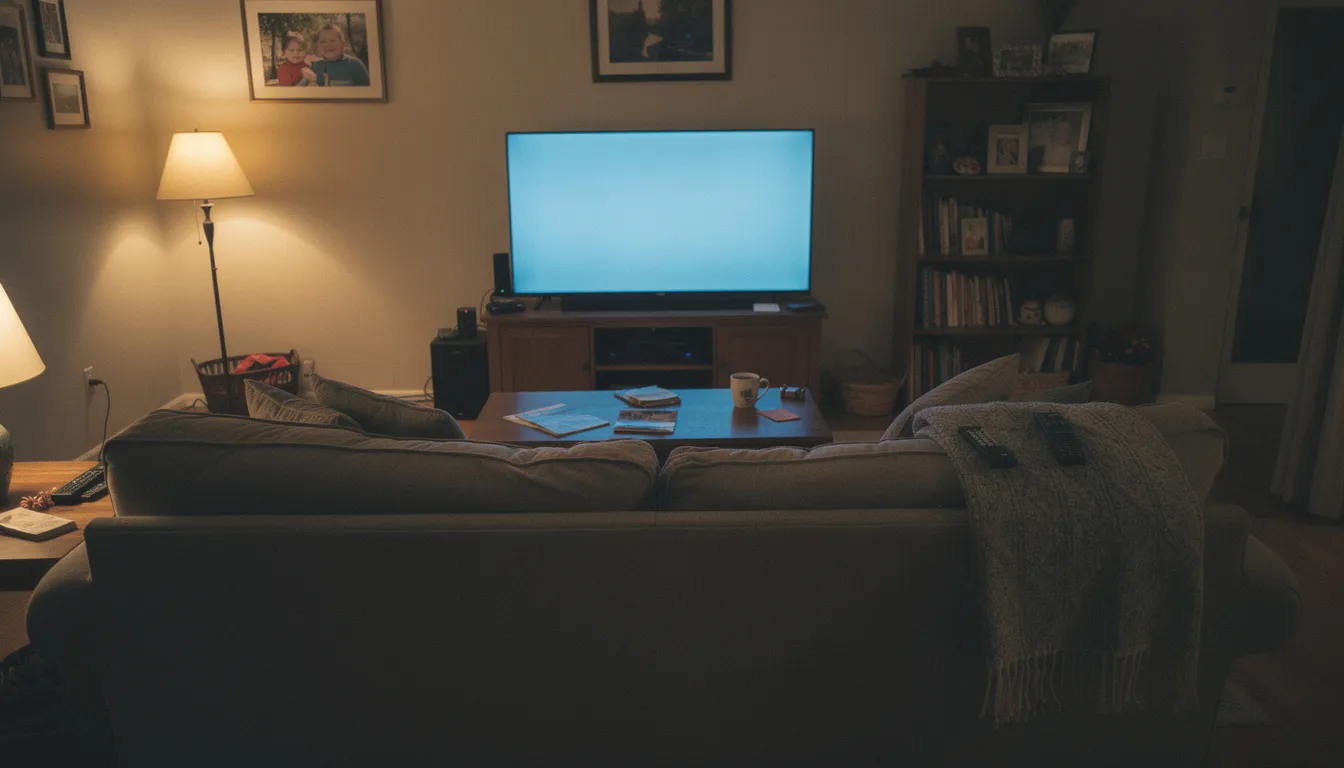
MURFREESBORO, TN — After receiving a targeted ad for grief counseling during a Tuesday rerun he was not visibly upset about, Dennis Hartfield, 41, began investigating his smart TV’s privacy settings and discovered the device had been logging his viewing behavior, ambient audio samples, and room presence data continuously since its activation in February of 2022.
The television, a 65-inch model Hartfield purchased during a Presidents’ Day sale, had been transmitting data to its manufacturer’s analytics partner under a consent clause buried in the original setup agreement—a 34-page document Hartfield confirms he scrolled through in under eleven seconds while his frozen pizza finished heating.
“It knows I watch the eleven o’clock news and then immediately turn it off before the weather,” said Hartfield, reviewing a downloadable summary of his profile. “It knows I started ‘The Chosen’ three times and never finished season two. It knows more about my evenings than I do.”
“The device has compiled 1,460 days of behavioral data. The profile is detailed, accurate, and, frankly, more self-aware than the subject.”
A privacy researcher at Vanderbilt University who reviewed Hartfield’s data file described it as “a longitudinal portrait of a man who is almost certainly fine but clearly has not sat quietly with himself in several years.”
Carla Desmond, 39, Hartfield’s wife, said she was not surprised by the disclosure. “The TV knows he watched the same three episodes of ‘Deadliest Catch’ every Thursday in 2023. I knew that too. Nobody asked me.”
Hartfield has since covered the television’s camera with a Post-it note, which the device’s motion sensor logged as an “engagement event” at 9:14 p.m.
At press time, Hartfield had opened his TV’s privacy dashboard, located the opt-out toggle, and closed the menu without changing anything.