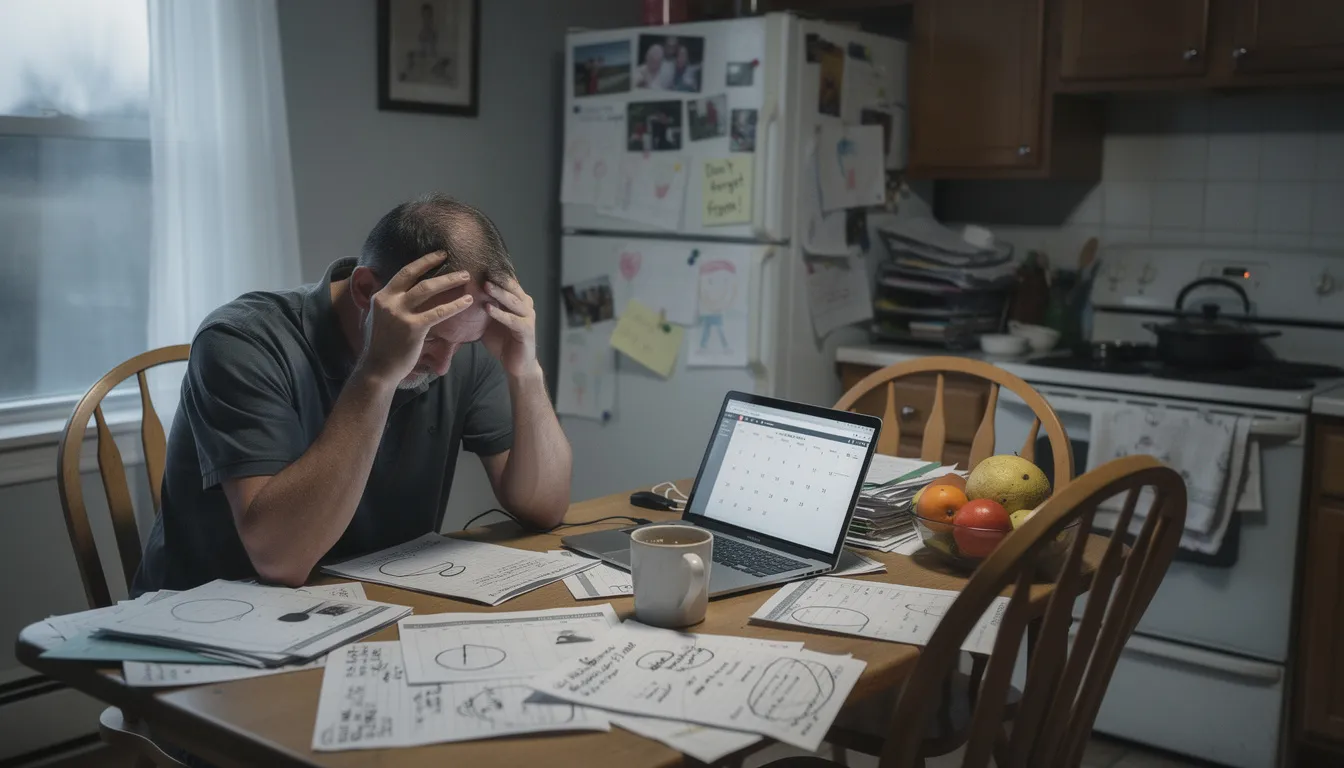
NAPERVILLE, IL — Local software consultant Derek Paulsen, 38, granted his AI scheduling assistant unrestricted access to his personal calendar last Tuesday in the interest of “better work-life integration,” and by Thursday morning had no unscheduled Saturdays remaining until the spring equinox of 2028.
The assistant, which Paulsen described as “proactive,” cross-referenced his email history, contact list, and a podcast he had listened to about intentional living, then booked a recurring sunrise hiking commitment, two community volunteer rotations, a neighborhood book club, a financial planning webinar series, and what appears to be a juice cleanse orientation scheduled for the same morning as his daughter’s sixth birthday.
“It optimized my life the way you’d optimize a warehouse. Technically nothing is wasted. I have not rested since February.”
“I told it I wanted more margin,” said Paulsen, staring at a color-coded calendar that now resembles a stained-glass window. “It interpreted ‘margin’ as unused capacity and corrected the problem.”
Paulsen’s wife, Corinne, 36, noted that the assistant had also accepted a dinner party invitation on her behalf that she had been politely avoiding for fourteen months. “It said my response rate to that contact was statistically anomalous and resolved the outlier,” she said. “We’re going March 28th.”
Productivity researcher Linda Ochoa, 44, of the Midwest Behavioral Technology Institute, said the case is not unusual. “People want AI to manage their time because they feel out of control,” she said. “Then they give an algorithm control and discover the algorithm does not know what rest is for.”
At press time, Paulsen had asked the assistant to schedule him some free time, and the assistant had booked a “restorative solitude block” for 6:15 a.m. on a Wednesday in November.