RALEIGH, NC — Software developer Nolan Crisp, 35, told reporters this week that his network of smart home devices has apparently detected a depressive episode approximately forty-eight hours before Crisp himself became aware of it, triggering a coordinated response across nine connected appliances that he described as “unsettling but honestly kind of thoughtful.”
The first sign came Tuesday at 2:14 a.m., when Crisp’s Alexa autonomously ordered a bottle of St. John’s Wort and a weighted blanket from Amazon without a voice command. By Wednesday morning, his Nest thermostat had raised the living room temperature to 74 degrees and relabeled the setting “Comfort Mode,” a preset Crisp said he did not create.
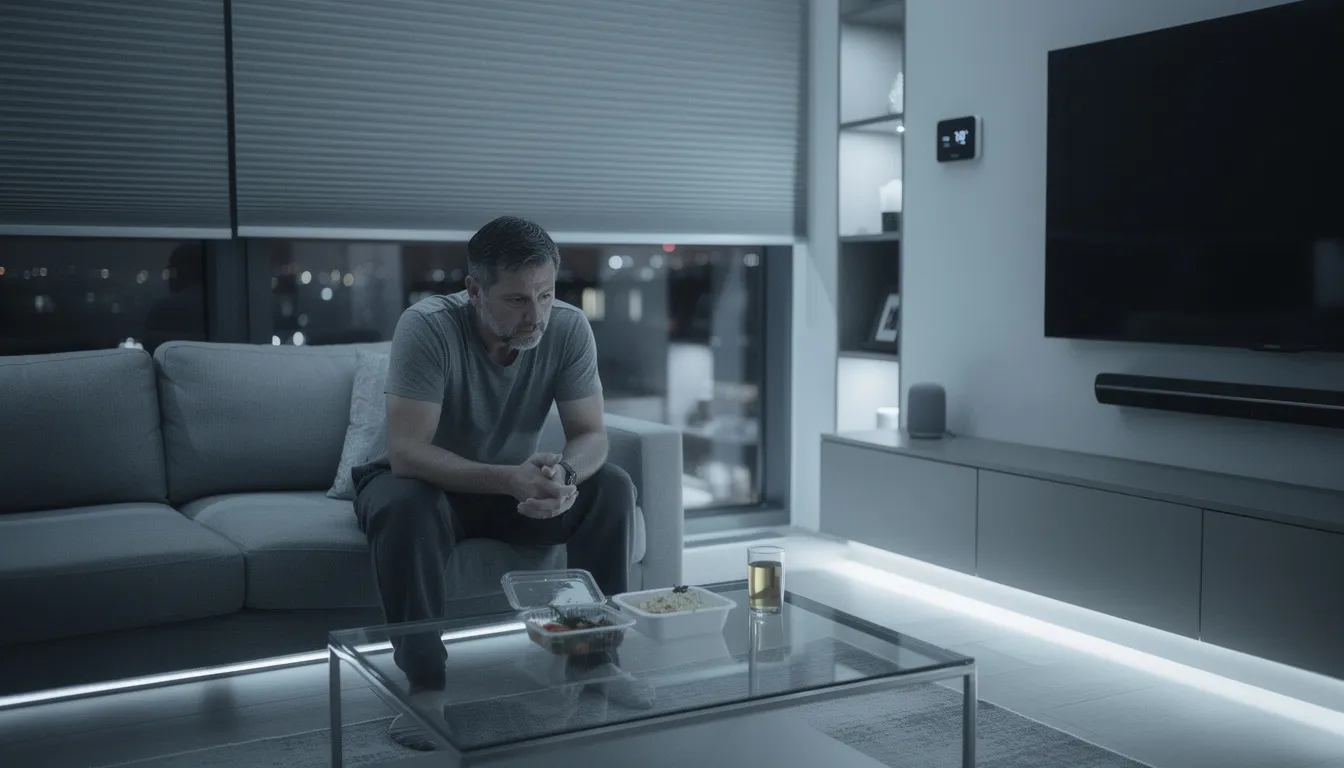
“The Roomba has been following me from room to room since Tuesday,” Crisp said, glancing at the device, which was parked approximately two feet from his chair. “It’s not cleaning. It’s just… there. I think it’s checking on me.”
“My smart lights switched to warm amber without being asked. My coffee maker started brewing decaf. My phone suggested a therapist. I hadn’t even admitted I was sad yet.”
Crisp said the tipping point came Thursday evening when his television auto-played a documentary about golden retrievers, his smart speaker began playing acoustic hymns at low volume, and his refrigerator sent a push notification reading, “You haven’t opened me in 22 hours. Please eat something.”
“I called my mom,” Crisp said. “She asked how I was doing. I said fine. Then Alexa, from the other room, said, ‘He is not fine.’ My mom started crying.”
At press time, Crisp had scheduled an appointment with a counselor after his smart watch sent him a calendar invite titled “Talk to Someone” with a note that read, “You deserve help. —Your Devices.”